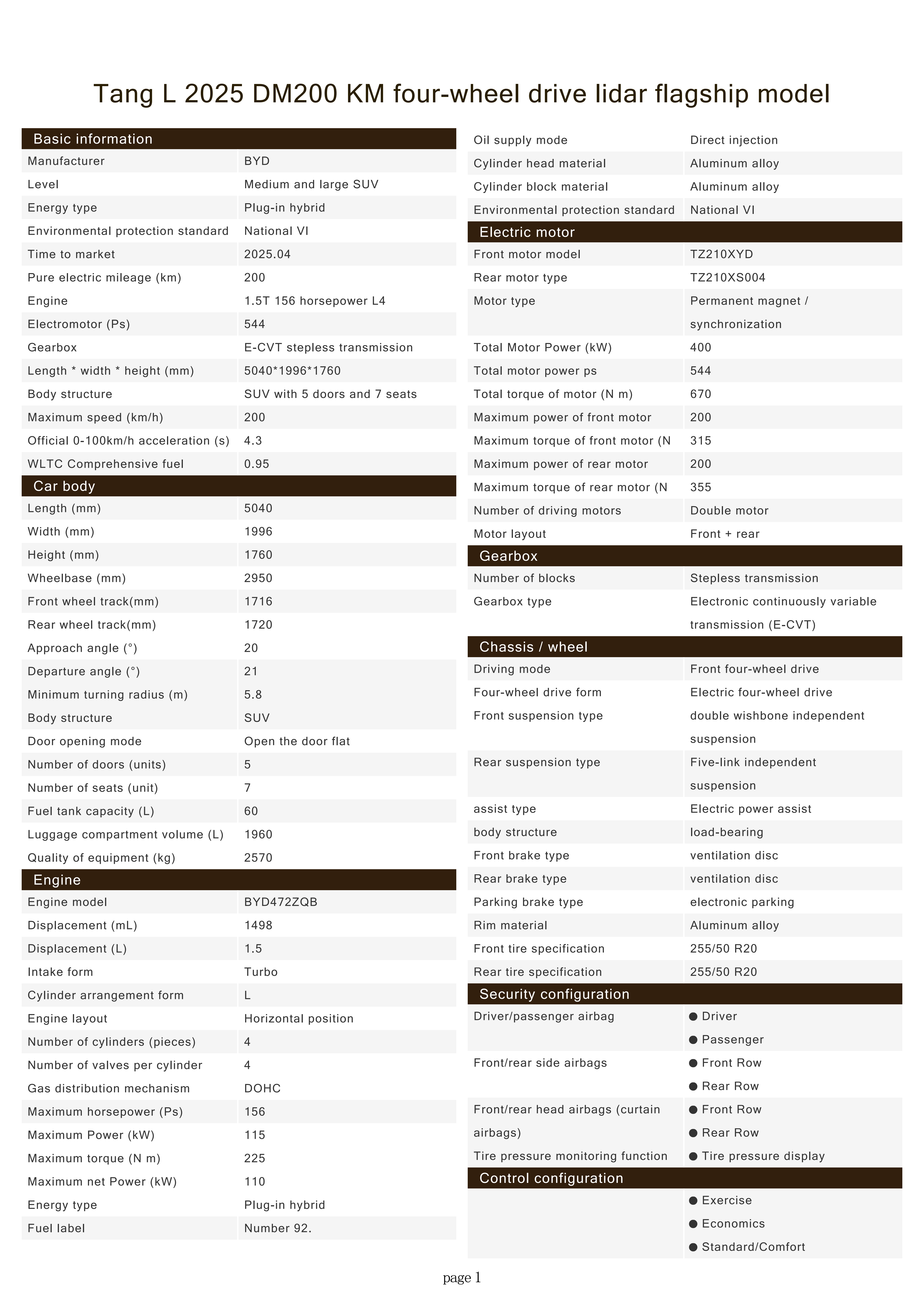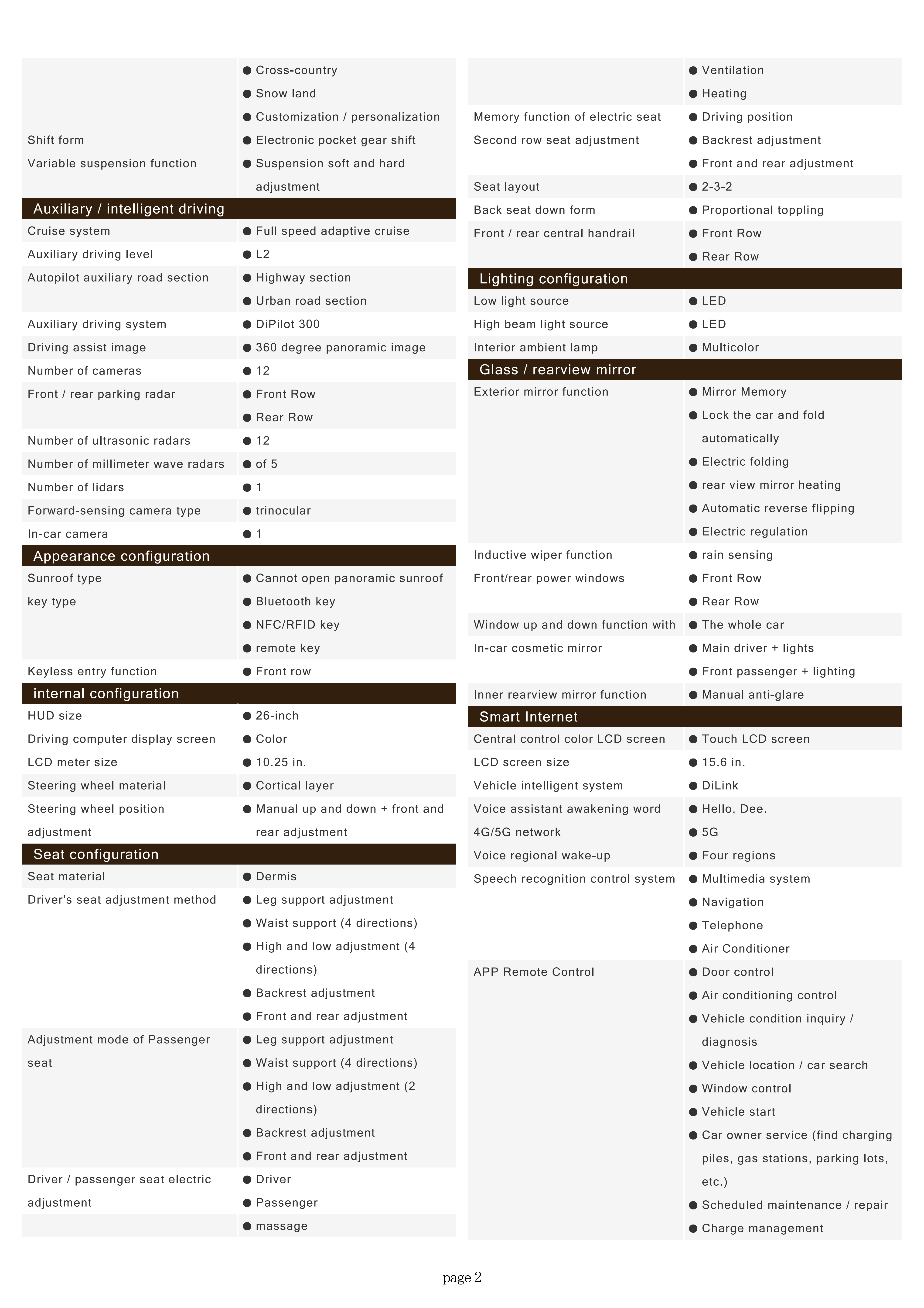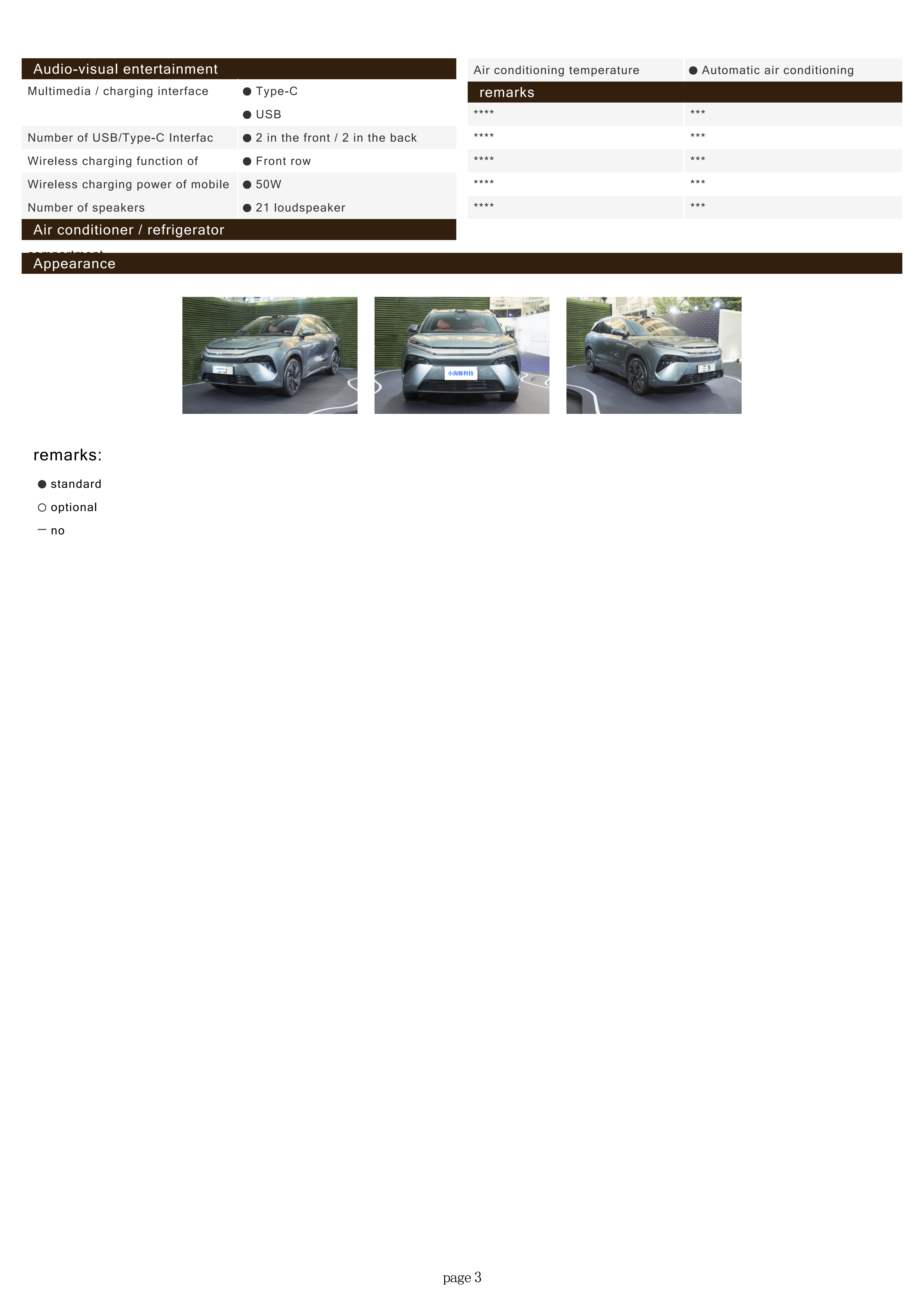
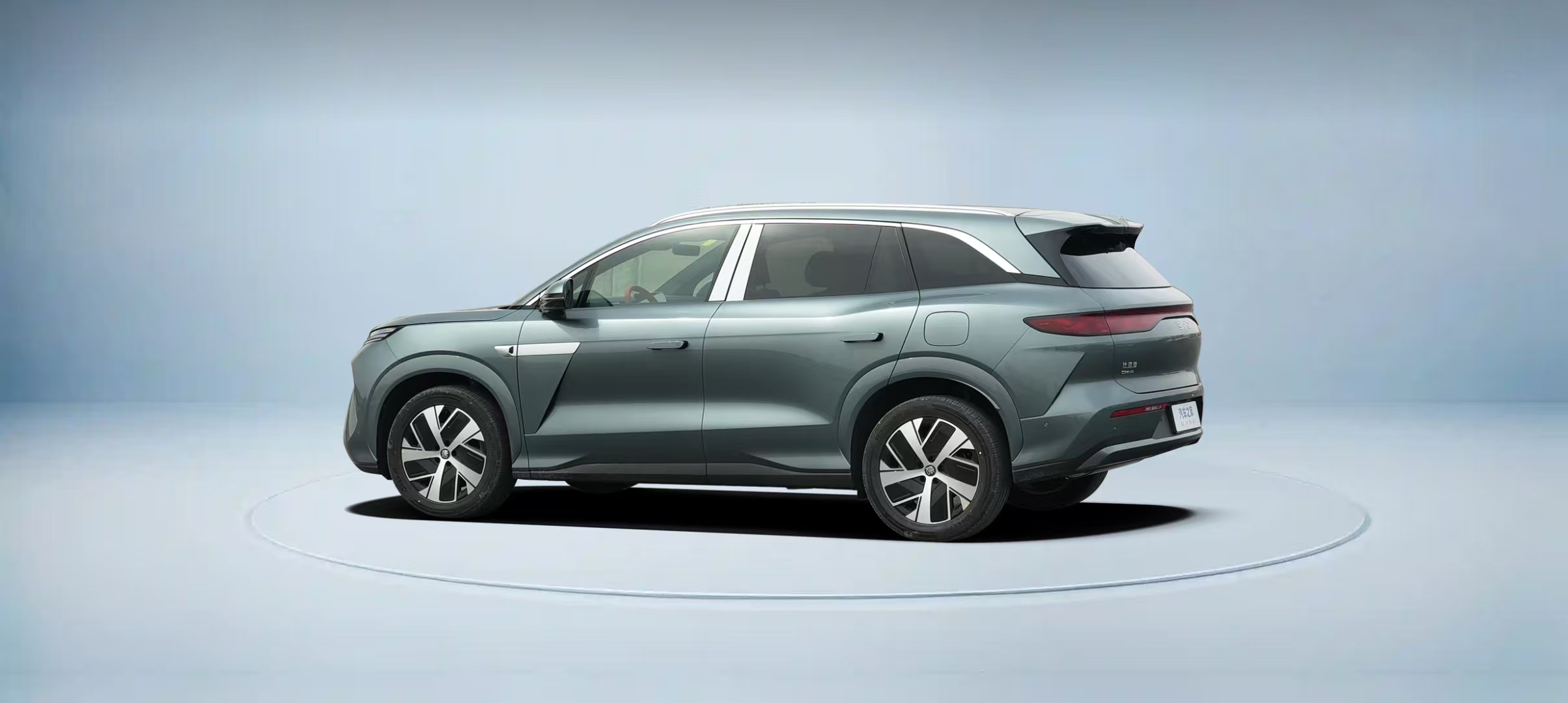
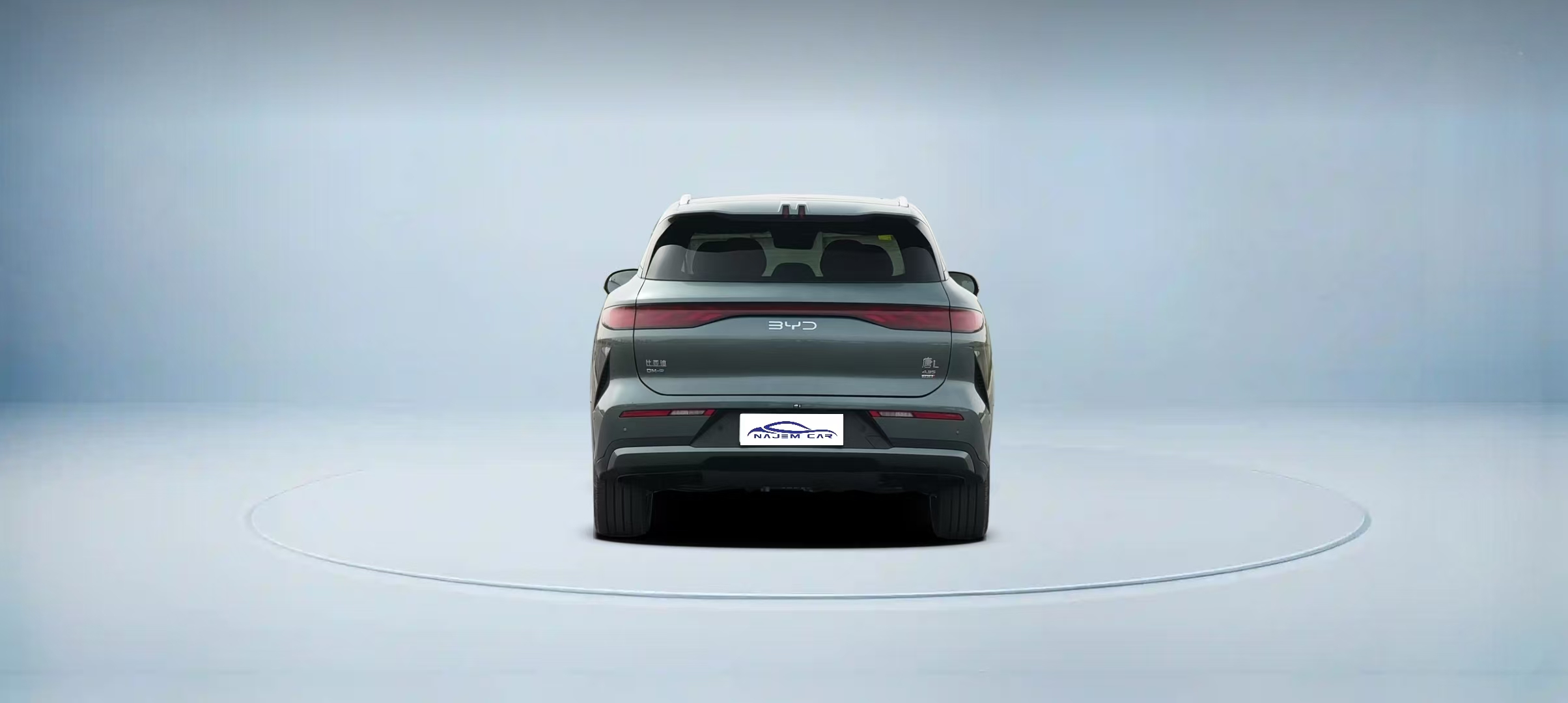
The BYD Tang L DM measures 5,040 mm in length, 1,996 mm in width, and 1,760 mm in height, with a vehicle height of 1,970 mm for the drone-equipped version. The wheelbase is 2,950 mm. It is equipped with the fifth-generation DM technology, featuring a 1.5T hybrid-specific engine with a maximum power output of 115 kW and an electric motor with a power output of 200 kW.
If you are interested in this model or have any other automotive needs, please feel free to contact us using the form below. With over ten years of experience in the automotive trade, we are here to solve all your problems and provide the best solutions for your requirements.
Exterior Design
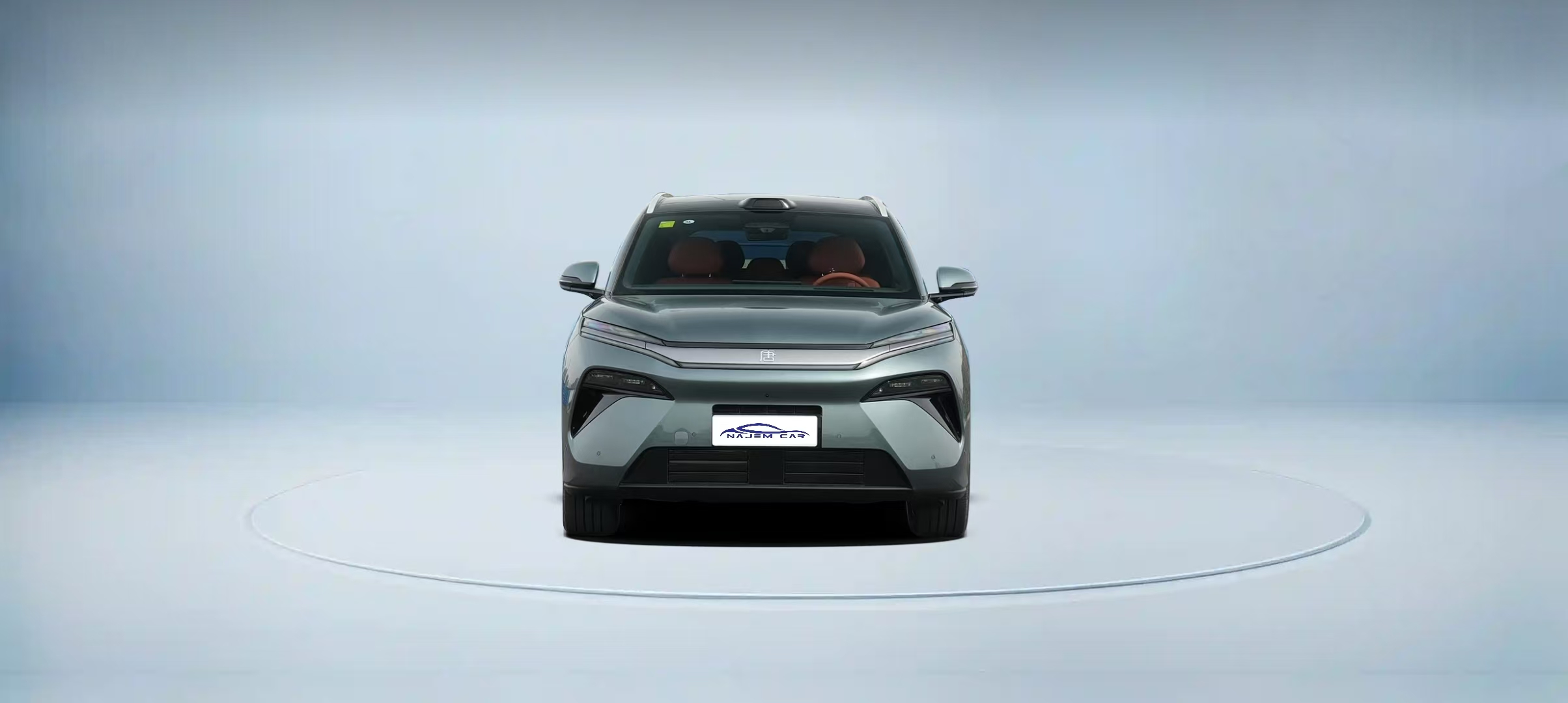
The BYD Tang L DM features BYD’s all-new Dragon Face design language, giving the front end a more powerful appearance. The headlight clusters adopt a split design, further enhancing the vehicle’s tech-forward aesthetic.
The through-hole light strip and newly designed daytime running lights greatly enhance the Tang L’s recognizability, while black decorative components have been added to the headlight assembly to visually widen the proportions of the entire front end. The front bumper features a fully enclosed design, and an active air intake grille is located below the license plate. This design is used on both the pure electric and hybrid models.
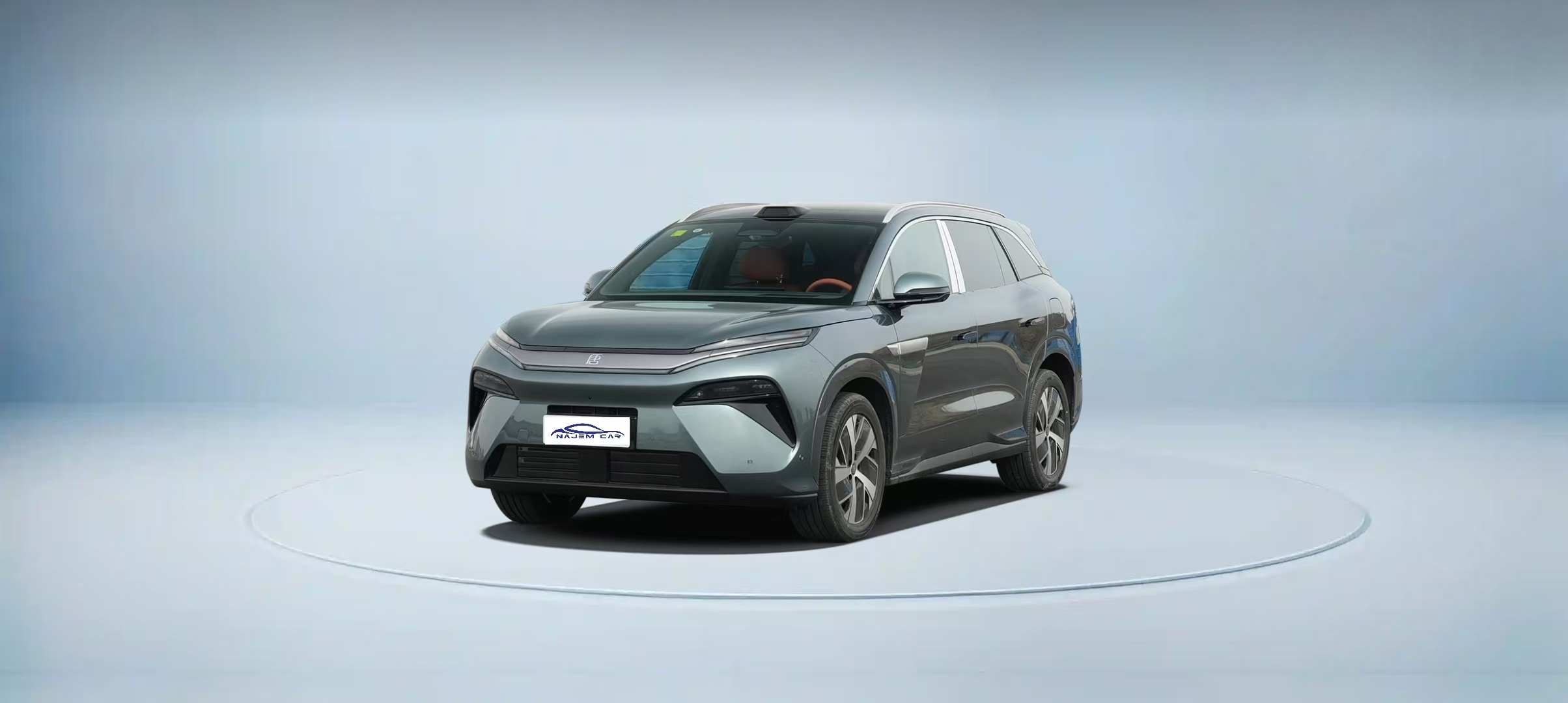
When the name includes the letter “L,” it indicates that the vehicle’s length and wheelbase have been increased. The BYD Tang L DM measures 5,040 x 1,996 x 1,760 mm in length, width, and height, with a wheelbase of 2,950 mm, approximately 50 mm longer than the current model. It will continue to feature a 7-seat layout to meet various usage needs.
The side profile of the Tang L is extremely bold, with a silver trim added to the front fenders and doors, and a design resembling side air vents on the doors, giving it a strong sporty appearance. As a new energy vehicle, hidden door handles are a must.
The roof is equipped with a laser radar, and numerous cameras have been added to the rearview mirrors and front fenders to support the advanced intelligent driving assistance system, “Heavenly Eye-B.” The new model will feature 21-inch low-drag wheels with a whirlwind-style design, paired with 265/45 R21 tires, giving it an incredibly powerful presence.
The changes to the rear are also very obvious. Although it still uses Chinese knot-style through-hole taillights, the light strips inside use a bamboo joint design, which looks like woven bamboo when lit. In addition, the rear badge uses a luminous logo design, which greatly enhances the car’s recognizability.
Interior design
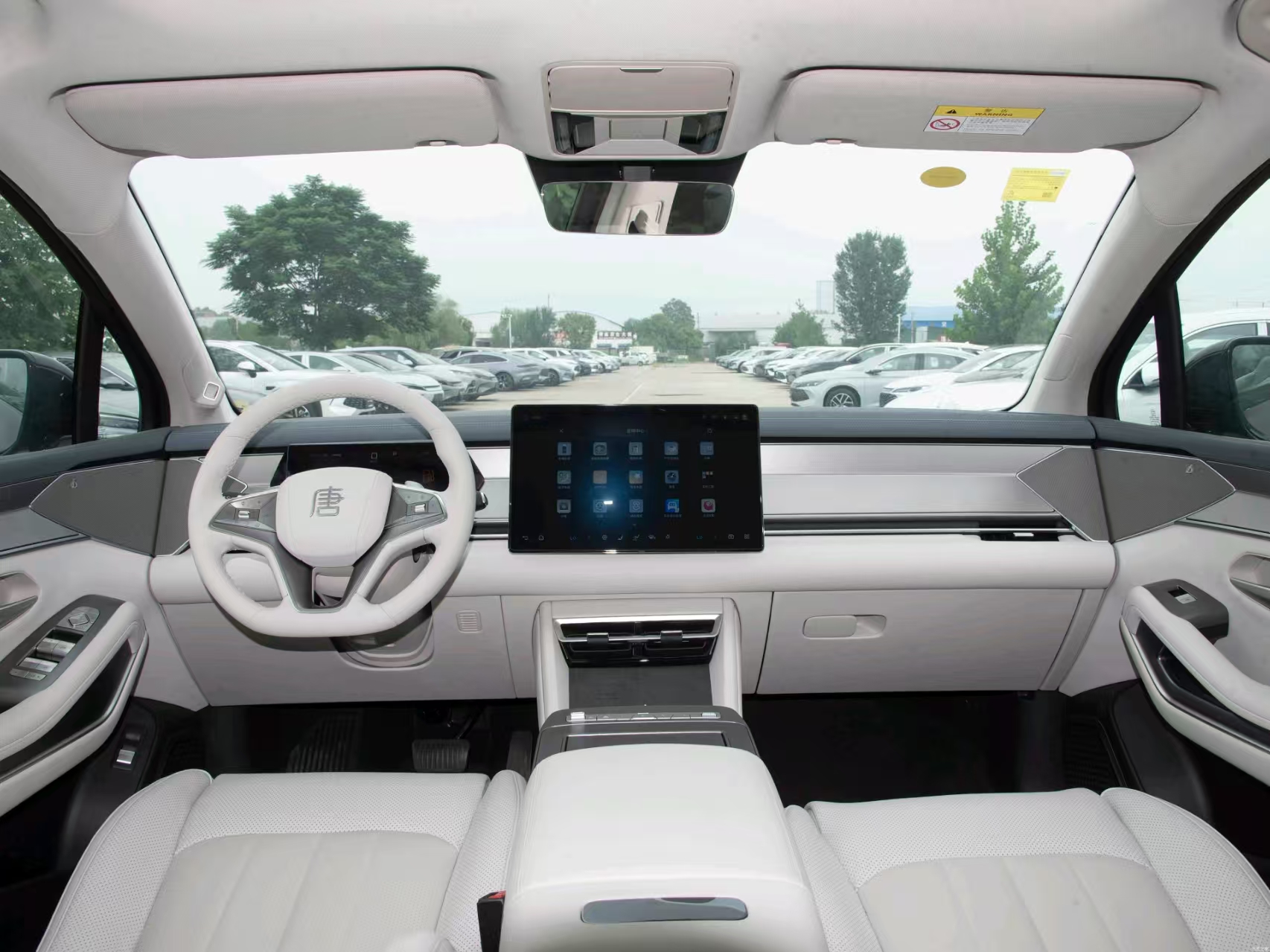
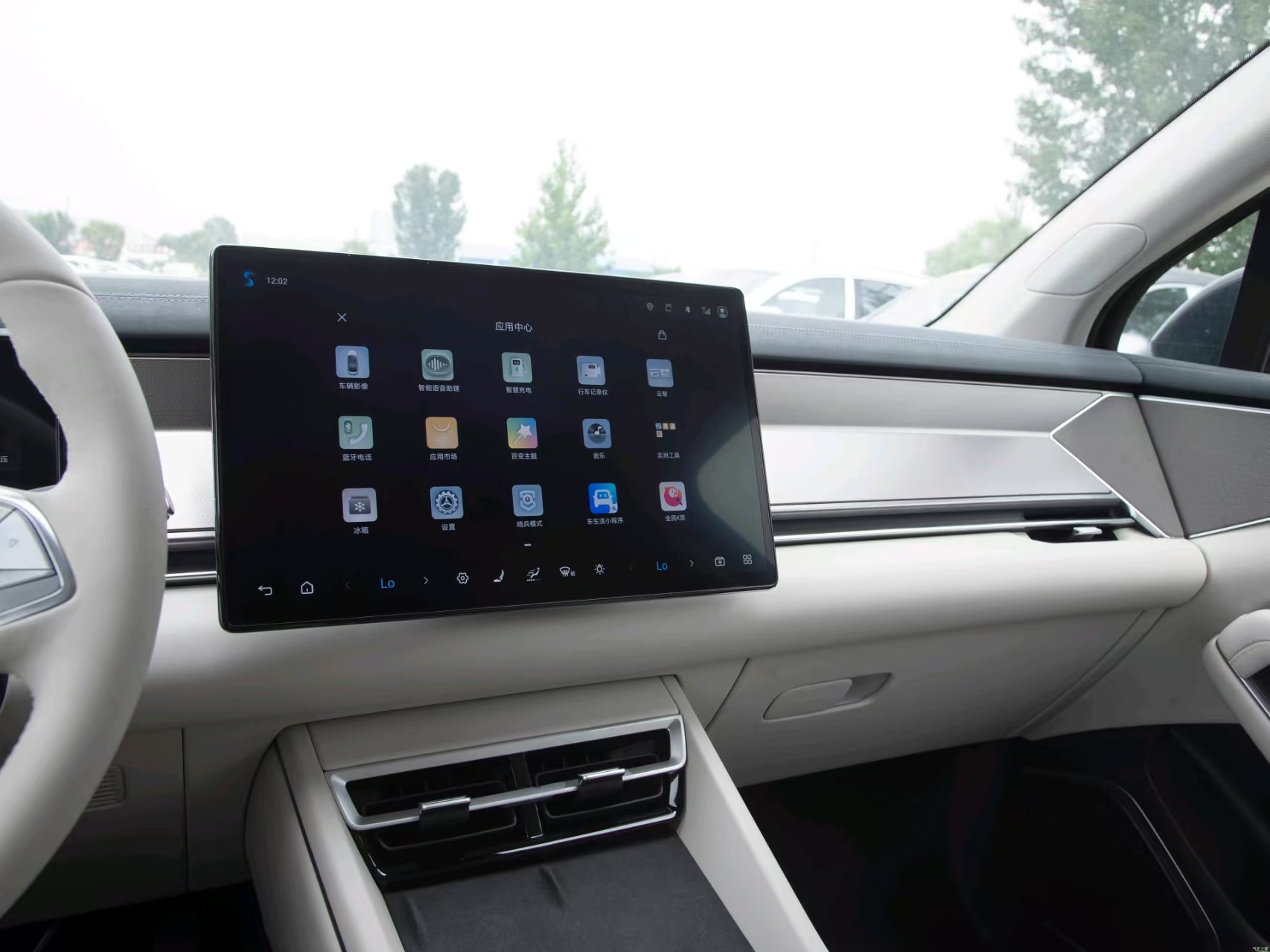
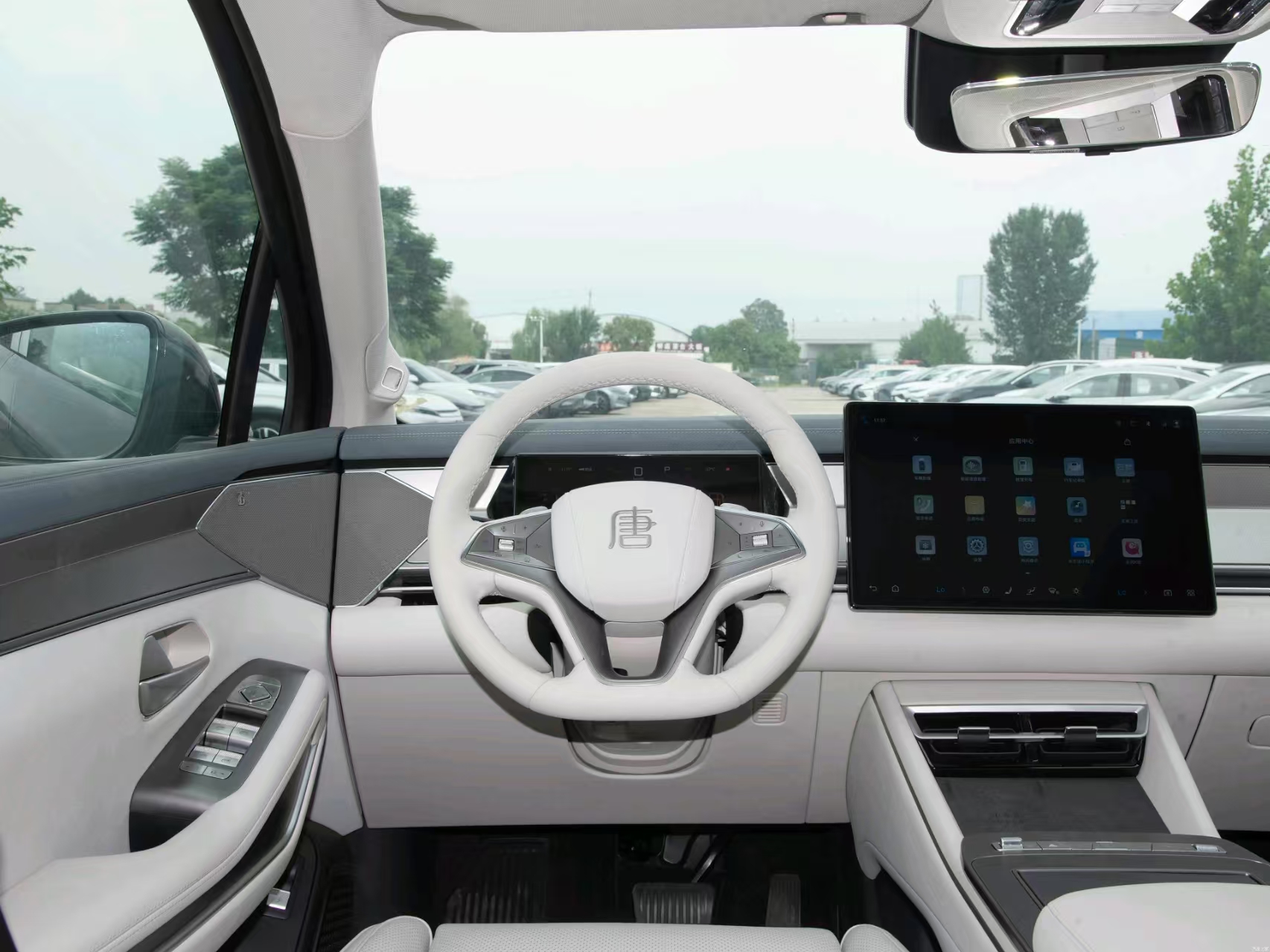
The BYD Tang L DM has been upgraded to the Di-Link 150 cockpit, with the layout, design, and materials remaining largely unchanged, except for some minor details. Both models feature a 15.6-inch central control screen and have replaced the electronic gearshift with a traditional gear lever.
The steering wheel offers an excellent grip and retains traditional physical multifunctional buttons, minimizing the risk of accidental operation. Behind the steering wheel are two smart driving control levers, allowing drivers to activate smart driving mode with a single press, offering great convenience.
The LCD instrument panel displays vehicle information and can switch to full-screen map mode, showcasing a strong sense of technological sophistication. In addition to the screen display, both vehicles are also equipped with a HUD head-up display, which is very practical for both urban driving and highway driving.
The BYD Tang L DM features a 7-seat layout. The front seats offer excellent support, cushioning, and firmness, and are made from skin-friendly materials. Both front seats are equipped with leg rests and support heating, ventilation, massage, and memory functions.
Power
The BYD Tang L DM is powered by the fifth-generation DM technology, featuring a 1.5T hybrid-specific engine with a maximum power output of 115 kW and an electric motor with a power output of 200 kW. It is equipped with the Tian Shen Zhi Yan intelligent driving system, which utilizes BYD’s single-laser radar solution, and features the Yun Nian-C system.